Do Used EV Prices Really Crash? A Hard-Nosed Analysis of the 2026 Resale Market
Written by: Smith EV Broker
EV Insurance Consultant | First-hand market experience
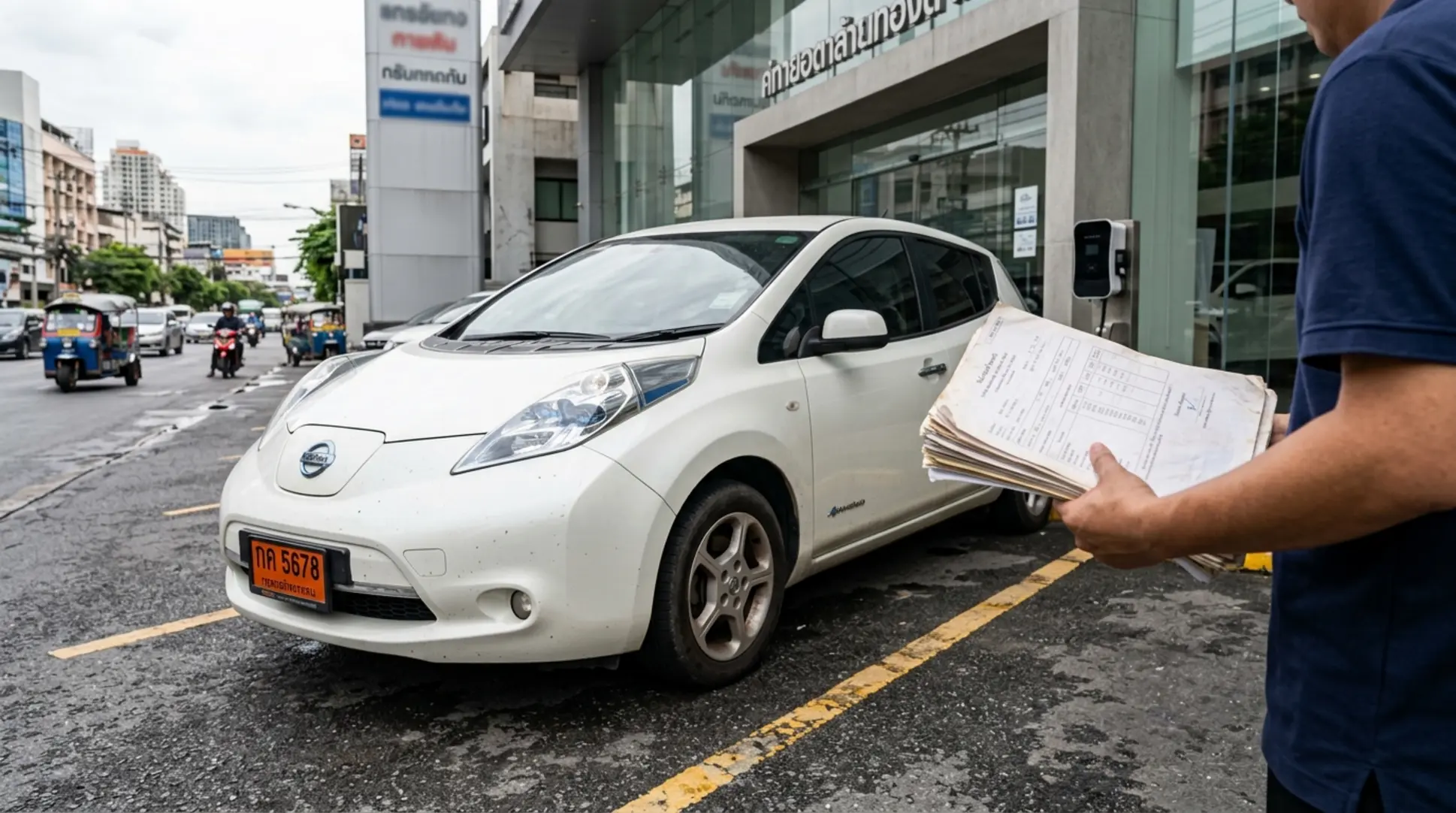

The Real Depreciation Picture for Used EVs in Thailand
The #1 Price Killer: New-Car Price Wars — Not Battery Degradation
Before we blame battery aging for tanking resale values, let us confront the uncomfortable truth: the single biggest factor crushing used EV prices is new-car price cuts by the manufacturers themselves. Brutal competition forces automakers to keep slashing sticker prices to grab market share, and those cuts cascade straight into the used market like a wrecking ball.
The clearest example is the MG4. At launch, it was priced around 850,000 THB. Over time, promotions and official price cuts brought the new-car price down to roughly 550,000 THB — a 300,000 THB drop. When a brand-new one costs 550,000 THB, a used one from two years ago cannot possibly command more than the low 400,000s. This is depreciation driven by market intervention, not mechanical deterioration.
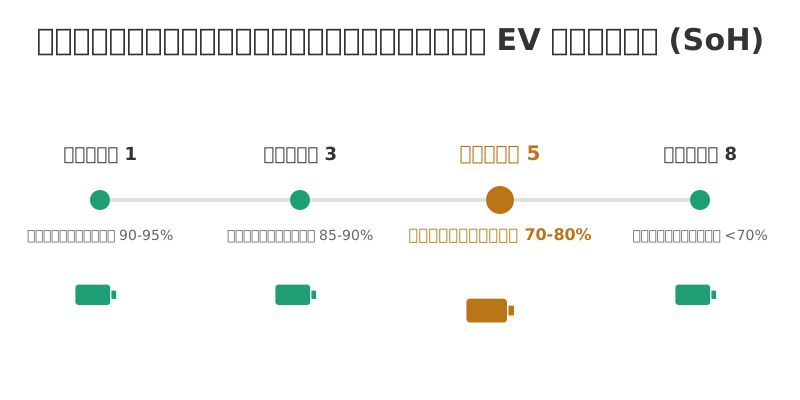
The silver lining: once prices reach this level, they start approaching a floor. And on the performance side, real-world data shows that most EVs driven for 5-8 years still retain over 80% battery State of Health (SOH). These cars are not rolling scrap metal. They are deeply discounted assets with years of useful life ahead.
| Model (Registration Year) | Original New Price (Approx.) | Used Market Price 2026 (Approx.) | Primary Cause |
|---|---|---|---|
| MG4 EV (2023) | 850,000 THB | 400,000 - 430,000 THB | New-car price cut to ~550K THB |
| Tesla Model 3 (2022) | 1,600,000 THB | 1,000,000 - 1,100,000 THB | Highland refresh / pricing restructure |
*Note: Data sourced from mid-2026 used car market surveys.*
Total Cost of Ownership: The Full Financial Picture
TCO Analysis: EV vs. Petrol vs. Hybrid
Judging a used EV purely on its resale price misses the entire point. You have to look at Total Cost of Ownership (TCO). According to ttb analytics, EV energy costs are 59-67% lower than combustion cars. Annual road tax for a D-Segment EV runs just 330-380 THB, versus 4,848 THB for a 2,487cc petrol equivalent. Those savings accumulate year after year.
There is a counterweight: EV tires wear roughly 20% faster due to heavy battery weight and instant torque. And Class 1 EV insurance premiums still run about 30% higher than equivalent petrol cars. But for drivers covering 15,000-20,000+ km annually, the energy savings overwhelm both of these cost disadvantages, and the EV comes out decisively ahead.
10-Year TCO Comparison: Used EV vs. Hybrid vs. ICE
According to automotive research referenced by iPhoneMod, used EVs deliver the lowest Total Cost of Ownership when compared against ICE, HEV, and PHEV alternatives over a 10-year, 150,000 km ownership period. The per-kilometer energy savings of an EV (averaging 0.8-1.2 THB/km) accumulate to roughly 120,000-180,000 THB in cash savings — enough to offset higher insurance premiums and faster tire wear with plenty of margin left over.
| Powertrain (10 Years / 150,000 km) | Energy Cost (Approx. THB) | System Maintenance (THB) | TCO Value Rating |
|---|---|---|---|
| Internal Combustion Engine (ICE) | 375,000 | 85,000 | Moderate-Low |
| Hybrid (HEV) | 240,000 | 110,000 | Moderate-High |
| Used EV | 135,000 | 60,000* | Highest |
*(Note: *Excludes full battery pack replacement, as most battery warranties cover 8 years or 160,000 km.)*
When Is the Best Time to Buy a Used EV?
Target 2-3 Year Old Cars: The Value Sweet Spot
The strategy I consistently recommend: hunt for cars that are 2-3 years old — right now, that means 2023-2024 models. These cars have already absorbed the brutal first-owner depreciation hit (many have lost 30-40% of their new price). Yet they still have roughly 5 years of factory battery warranty remaining. You get a nearly-new car at a massive discount, protected by warranty so you are not lying awake worrying about EV battery replacement costs. And after the brutal first three years, depreciation slows considerably — the value curve flattens out.
How to Pick a Used EV Model That Minimizes Your Downside Risk
To reduce the risk of buying a car that becomes technologically obsolete too quickly, stick to EV brands in Thailand's Top 5 by sales volume. High-volume models guarantee parts availability and market liquidity when it is your turn to sell.
The single most important pre-purchase step: demand the complete service center visit history. And obtain an official Battery State of Health (SOH) certificate from the manufacturer. A used EV worth buying should show SOH of no less than 90% within the first 3 years. Lean on these hard numbers — they are your best defense against being misled, and they transform a used EV from a perceived gamble into the most cost-effective transportation investment of this decade.
Related Articles
- EV Maintenance Tips 2026: What to Know Before You Drive
- Best EV Tires 2026: Which Brand? Load Index Guide
- EV Battery Replacement Cost 2026
- Why 3-Phase Power for Your Home EV Charger?

For a full overview of EV car insurance Thailand, including battery coverage, claim conditions and pricing, visit the PrakanEV homepage.