BYD DiPilot Explained: If Driver-Assist Crashes, Who Actually Pays?
Prepared by: The PrakanEV Team
Last updated: July 2026
Background: We track EV technology developments and insurance implications across every brand sold in Thailand.
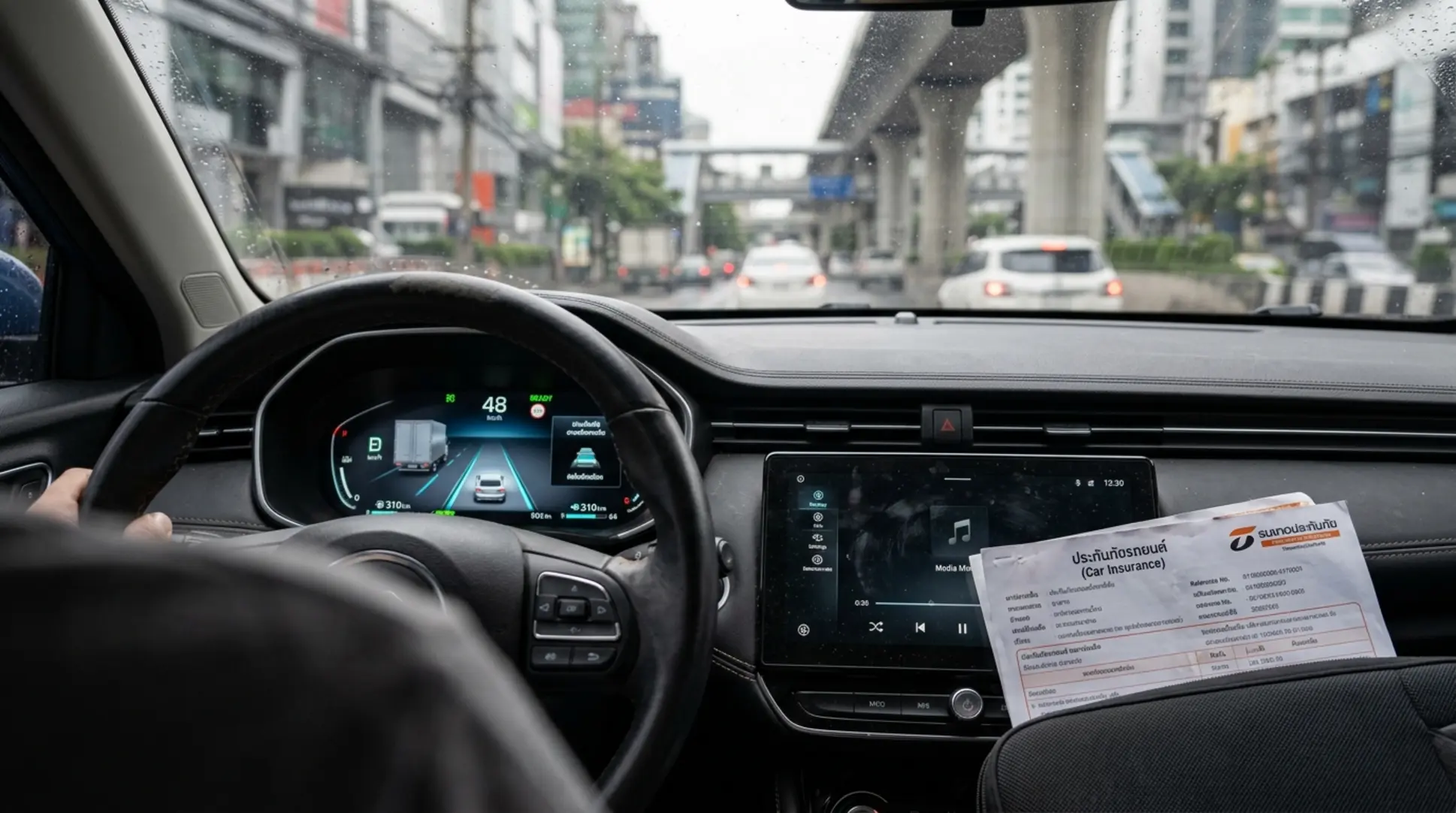
1. What Is BYD DiPilot? The Quick Version
BYD DiPilot is, in everyday terms, your personal co-pilot — a system that constantly watches the road around you. Technically, it belongs to a category called ADAS (Advanced Driver Assistance Systems). It does not use magic. It uses hardware mounted all around the car as its eyes and ears:
- High-resolution cameras: Read traffic signs, track lane markings, and monitor surrounding vehicles.
- Radar sensors: Send out radio waves to measure the speed and distance of vehicles ahead — works through rain and fog.
- Ultrasonic sensors: The close-range parking sensors you already know from reverse parking — same technology, now also used at highway speeds.
2. What Can DiPilot Actually Do?
This system was built to reduce driver fatigue and lower accident risk. The features most BYD owners use every day:
- 🚗 Adaptive Cruise Control (ACC): Locks in your speed and automatically brakes or accelerates to match the car ahead. On long highway drives or in stop-and-go traffic, this is a game-changer.
- 🛣️ Lane Keeping Assist (LKA): Gently nudges the steering wheel to keep you centered in your lane. No more drifting into the next lane when you glance at the navigation screen.
- 🛑 Automatic Emergency Braking (AEB): If a pedestrian runs out or the car ahead slams its brakes and you do not react in time, the car will stomp the brakes for you. This feature alone has prevented countless rear-end collisions.
- 🗺️ Navigate on Autopilot: The most advanced feature — the car calculates routes, changes lanes, and can even take freeway exits on its own. Availability depends on your model and software version.
3. The Million-Baht Question: If DiPilot Crashes, Who Pays?
This is the heart of the entire article. The news you heard — "BYD pays everything" — is partially true, but the context is everything. Let us break it down clearly: China vs. Thailand.
🇨🇳 China (Where the Viral Story Came From)
In China, BYD runs a high-level program called "God's Eye" (天神之眼), under which the company has announced it will bear financial responsibility if the system makes an error. But — and this is a very big but — this is not a blanket promise for every BYD owner on earth. It comes with strict conditions:
- Available in China only.
- Only for owners who activate it under specific, strictly defined terms.
- Limited to certain vehicle models equipped with the top-tier hardware suite.
- Subject to a limited campaign period.
🇹🇭 Thailand (Where You Actually Drive)
As of 2026, the God's Eye program has NOT been announced for Thailand. If you have an accident while using DiPilot in Thailand, your insurance policy — specifically your Class 1 coverage — is what determines whether and how much you are paid. Not BYD.
Put simply: the insurance premium you pay every year is what covers your repair bill, not the car manufacturer. The only exception would be if you could prove a severe manufacturing defect caused the crash — and that is a long, expensive legal battle, not an insurance claim.
4. If the Radar Smashes or the Cameras Break — Does Insurance Cover It?
When you are in a front-end collision or a motorcycle clips your bumper, the expensive part is not the plastic bumper cover. It is the sensors buried behind it. So does Class 1 insurance cover these high-tech components?
- Broken camera / shattered radar: Covered 100%. These are factory-installed integral parts of the vehicle — not aftermarket accessories.
- Damaged sensors: If a deep scratch or impact destroys an ultrasonic parking sensor, insurance replaces it with a new OEM unit.
- ADAS recalibration costs: This is the one most owners do not know about! When a body shop removes your EV's front bumper for repainting and then reinstalls it, all cameras and radar units must be recalibrated using specialized computer equipment. This labor cost is significant — but insurance covers it, because it is a mandatory step in completing the repair properly.
5. Does Having Driver-Assist Tech Make My Insurance More Expensive?
| What Insurers Actually Look At | Why It Matters |
|---|---|
| Vehicle model and market value | A 1M+ THB car with a high insured sum naturally commands a higher premium. |
| Parts costs | Factory OEM cameras, radar modules, and LED headlights on modern EVs carry eye-watering replacement prices. |
| Specialized labor (Calibration) | Recalibrating ADAS systems requires proprietary diagnostic tools and trained technicians — the hourly labor rate is higher than for conventional cars. |