What Is an Insurance Deductible?
Written by: Thanawat
Insurance Actuary | Real experience, straight talk — no fluff
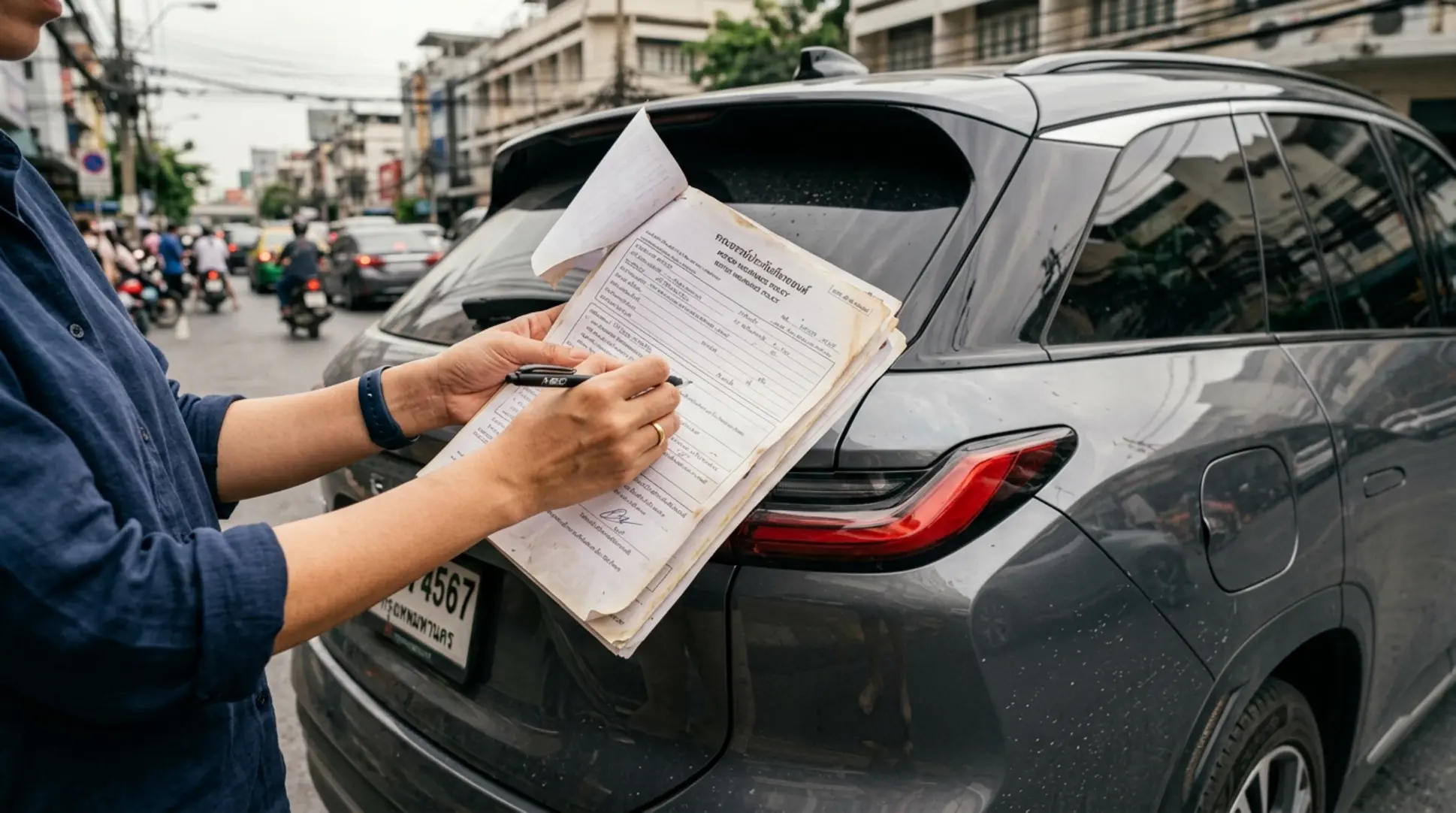
What Is the Difference Between Excess and Deductible?
When people talk about the "deductible" in Thailand, they are actually using one word to describe two separate concepts that often get mixed up. Let's settle this once and for all:
- What is Excess? This is the "mandatory deductible" (required by OIC regulations). It is normally 1,000 THB per incident. You are charged this amount when you bring your car in for a claim but "cannot identify what you hit or when the damage occurred." Classic examples: parking at a mall and returning to find someone sideswiped you, a rock chips your windshield on the highway, or scratches appear out of nowhere and you have no idea who did it.
- What is a Deductible? This is the "voluntary deductible." It is an amount you proactively agree to when buying your insurance (for example, you specify 1,000, 3,000, or 5,000 THB) in exchange for a discount on your annual premium.
So what is the difference between a 1,000 and 3,000 THB deductible? The answer is simple: the more risk you agree to carry yourself (e.g., a 3,000 THB deductible), the cheaper your annual premium becomes compared to someone who only accepts a 1,000 THB deductible. It is like telling the insurance company, "Hey, if it is a minor bump, I will chip in part of the cost myself." And the insurer rewards you by lowering your annual rate.
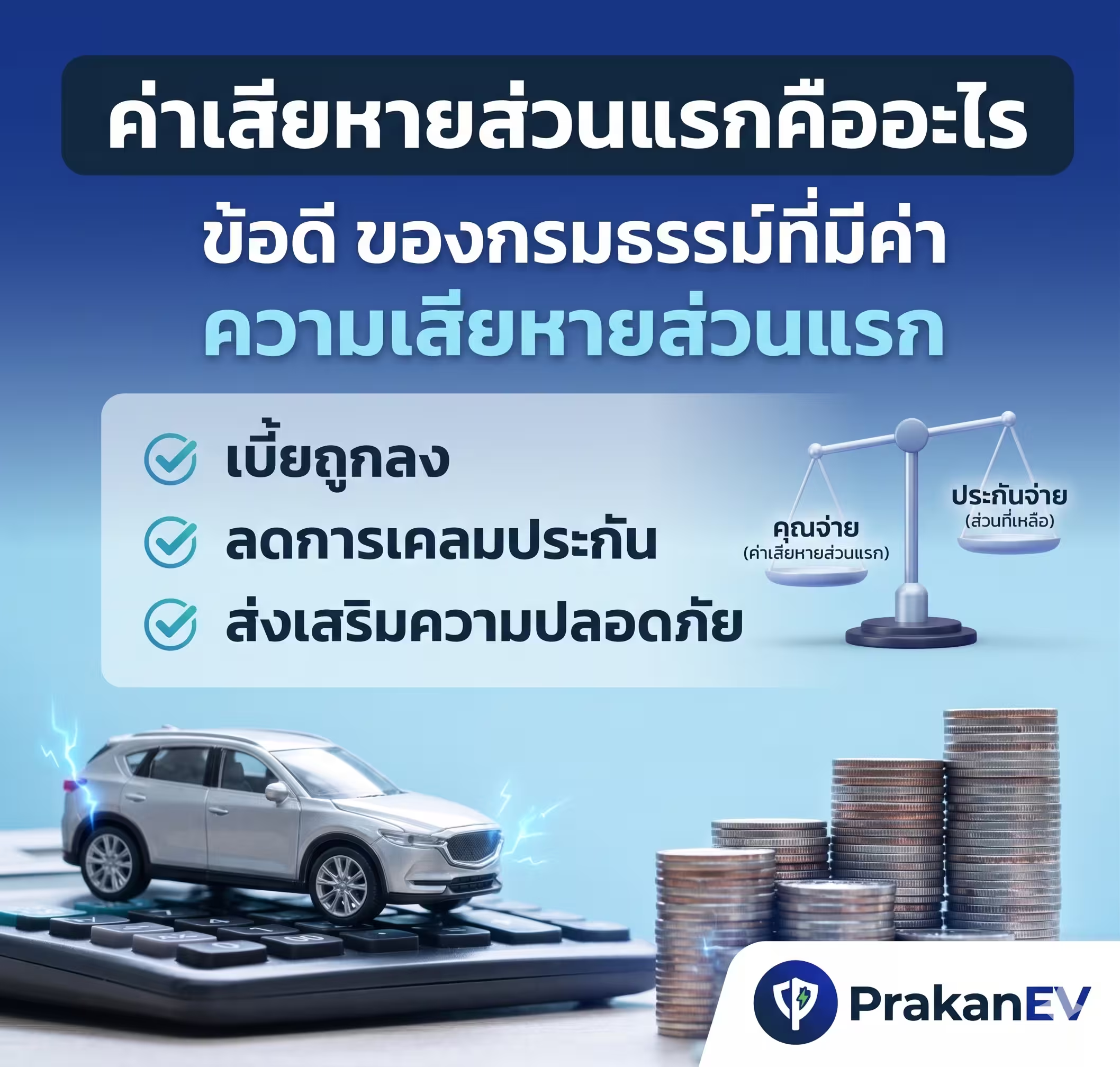
When Do You Actually Have to Pay the Deductible?
A lot of people worry, "When do I have to pay the deductible on an insurance claim?" Just remember these three simple rules:
- You are NOT at fault (the other party is clearly identified): You do not have to pay a single baht! The insurance company will go after the other party to recover costs on their own.
- You ARE at fault (you hit someone else, or reversed into your own gate): If you bought a policy with a voluntary deductible attached (e.g., 3,000 THB), you have to pay that first 3,000 THB when you drop the car off at the repair shop. The insurance company clears the rest of the repair bill in full.
- Your car has damage but you cannot identify who did it (hit-and-run): This is where you get charged the mandatory 1,000 THB Excess per incident.
Are EV Deductibles More Expensive Than Regular Cars?
For people who have recently switched to an EV, a common concern is: "Are EV excess fees more expensive than regular cars?" The answer is: the basic mandatory 1,000 THB Excess is exactly the same as a regular petrol car.
But hold on — the newer EV insurance regulations have one area that is stricter than petrol cars, and that is "named driver" policies. If your EV insurance policy lists specific named drivers and you let someone not on that list drive the car, and they end up in a collision, you will be hit with a significantly higher excess immediately: 6,000 THB (for repairing your own car) + 2,000 THB (for repairing the other party's car), totaling 8,000 THB! So whether you have MG insurance or BYD insurance, double-check the conditions and make sure the right names are on the policy.
Is Choosing a Policy with a Deductible Worth It?
Another very popular question is: "How much cheaper is a policy with a deductible?" (Even though people often say "excess" here, they really mean the voluntary deductible.) Generally, it will lower your annual premium by around 10–20%. If you are confident you are a skilled driver, have never been in an accident, and always park in safe, covered spots, accepting a deductible of 3,000–5,000 THB is an excellent deal — because you will save several thousand baht on your premium every year.
But if you ask me, from the perspective of someone who works with EV insurance every day, "Is a zero-deductible EV policy better?" — here is my honest advice.
For most everyday drivers who are reasonably careful, the plan with a 3,000 THB deductible is the most popular choice and the one I recommend the most. It significantly reduces your annual premium and delivers excellent value.
However, for customers who are new drivers, drive very frequently, or have to battle through congested urban areas like Bangkok on a daily basis, choosing Class 1 EV insurance with zero deductible at all is the better fit. It buys you 100% peace of mind — the moment you have an accident, the insurance pays the entire bill from the very first baht. No drama, no digging into your own pocket at the repair shop.
Real-World Example: If You Crash Your Tesla, How Much Do You Pay?
Let's run through a concrete example to make this crystal clear. Suppose you are driving your Tesla and accidentally reverse into a planter in front of your house. (This means you are 100% at fault.)
- The service center quotes the rear bumper repair and repaint at: 40,000 THB
- Your policy has a voluntary deductible set at: 5,000 THB
Your final bill: You have to pay the service center the first 5,000 THB out of your own pocket. The remaining 35,000 THB is handled directly by the insurance company — they will transfer the money to the service center themselves.
Summary: Which Option Should You Choose?
Short and sweet: if you are an everyday driver who is reasonably careful, I recommend choosing a plan with a 3,000 THB deductible. It is the most popular configuration and gives you the best premium savings for the value. But if you are a new driver, drive very often, or have to wrestle through dense urban traffic in places like Bangkok on a regular basis, choosing a plan with zero deductible (0 THB) will suit you better and give you far more peace of mind.
For anyone who wants to see the actual premium difference — with and without a deductible — for your specific car and figure out whether the risk is worth it, I recommend trying our real-time EV insurance comparison tool. You will see the actual numbers from each insurer side by side, making the decision much easier.
Related Articles
- Home EV Charger: Why Do You Need 3-Phase Power? Find Out Here
- Do EV Prices Really Drop? 2026 Used EV Resale Value Analysis
- Home Wallbox Installation 2026: How Much Does It Cost? Complete Wiring Breakdown
- New EV Insurance Rules 2026
- EV Battery Insurance Coverage Conditions
Want to see the real options? Browse EV insurance for every brand we cover, with starting premiums for each model, on the PrakanEV homepage.