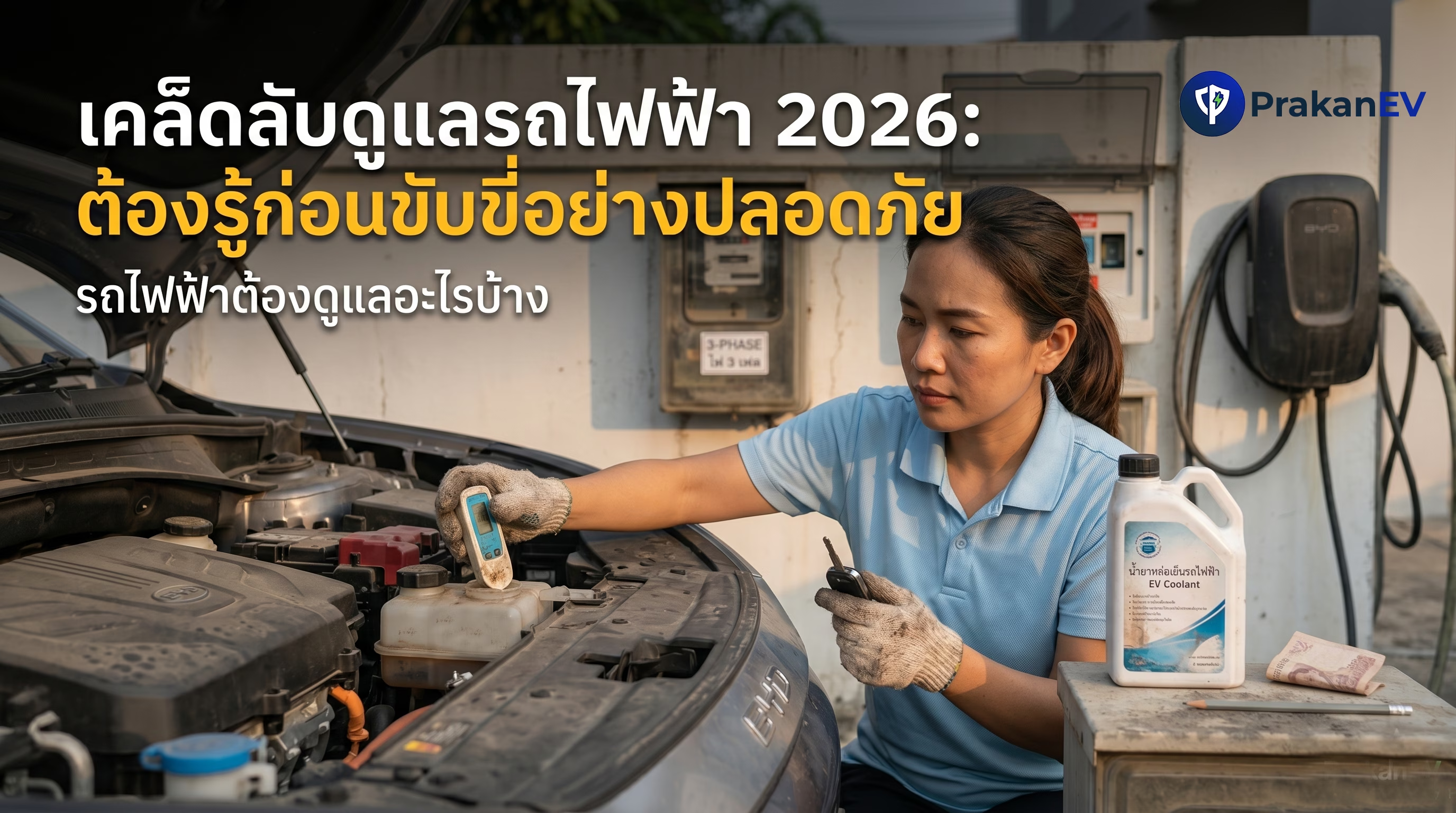
Essential EV Maintenance Tips: What Your Electric Car Actually Needs
When you switch to an electric vehicle, the most common question is: "What maintenance does an EV actually need?" While EVs have far fewer moving parts than petrol cars, they have their own specific care requirements to keep running efficiently for years.
Do EVs Need Battery Water?
No. The high-voltage lithium-ion battery is a sealed system from the factory — no distilled water needed. However, EVs still have fluids that need checking: coolant for the battery and motor thermal management system, brake fluid, and windshield washer fluid.
Do EVs Need Oil Changes?
No. With no internal combustion engine, there is no engine oil, no oil filter, and no spark plugs to replace. This alone saves thousands of baht per year compared to petrol cars.
Is EV Maintenance Harder Than Petrol Cars?
EVs are actually easier to maintain — no engine oil, no spark plugs, no timing belts, no exhaust system, and far fewer moving parts. The maintenance focus shifts from the engine to: the battery, charging system, thermal management, software, tires, suspension, and high-voltage electrical system.
Common Mistakes New EV Owners Make
Charging to 100% daily: Keeps the battery stressed and accelerates degradation.
Letting charge drop below 10% frequently: Deep discharges damage battery cells.
Using DC Fast Charge every day: Accumulated heat shortens battery life. Prioritize AC home charging.
Neglecting tire pressure: Heavy EVs with high torque eat underinflated tires rapidly.
Ignoring the home Wallbox: Ground systems and charging connectors need annual inspection.
What Does EV Scheduled Maintenance Look Like?
Popular Thai EVs like BYD Dolphin, MG4, AION Y Plus, Tesla Model Y, and others share five maintenance areas: battery / charging system / tires and suspension / brakes / software and cooling. Key tips: Keep charge between 20-80% for daily use. If parking over a week, leave battery at 50% in shade. AC home charging is gentler on the battery than DC fast charging. Check tire pressure monthly — EV-specific tires with HL (High Load) rating are essential. Rotate tires every 5,000-10,000 km. Regenerative braking extends pad life but still inspect every 10,000 km. OTA software updates improve BMS efficiency and safety systems.
Is EV Maintenance Expensive?
Routine service (every 10,000-20,000 km or 6-12 months): 1,000-3,000 THB. Tire rotation/balancing: 300-1,500 THB. EV tires (HL rated): 4,000-12,000+ THB each. Brake inspection/cleaning: 500-2,000 THB. Cabin air filter: 300-1,500 THB. Home charger inspection: 1,000-3,500+ THB annually. Overall, significantly cheaper than petrol car maintenance.
Real Owner Experiences After 1-3 Years
Tires wear faster than expected due to instant torque. Service costs are much lower than petrol cars — no oil changes, just hundreds to low thousands per visit. Modern BMS systems keep battery degradation minimal in early years — barely noticeable range loss. Home charging with a TOU meter saves dramatically versus public charging. The most common issue: home electrical system problems from lack of regular inspection.
Summary
EVs are not harder to maintain — they just need to be maintained differently. Focus on smart charging habits (avoid constant 100%), tire care, and scheduled software/battery checks at the service center. These simple habits will keep your EV running efficiently and safely for years.
PrakanEV provides EV insurance for all brands — from BYD, Tesla and MG to the newest models on the market. See the full list on our homepage.