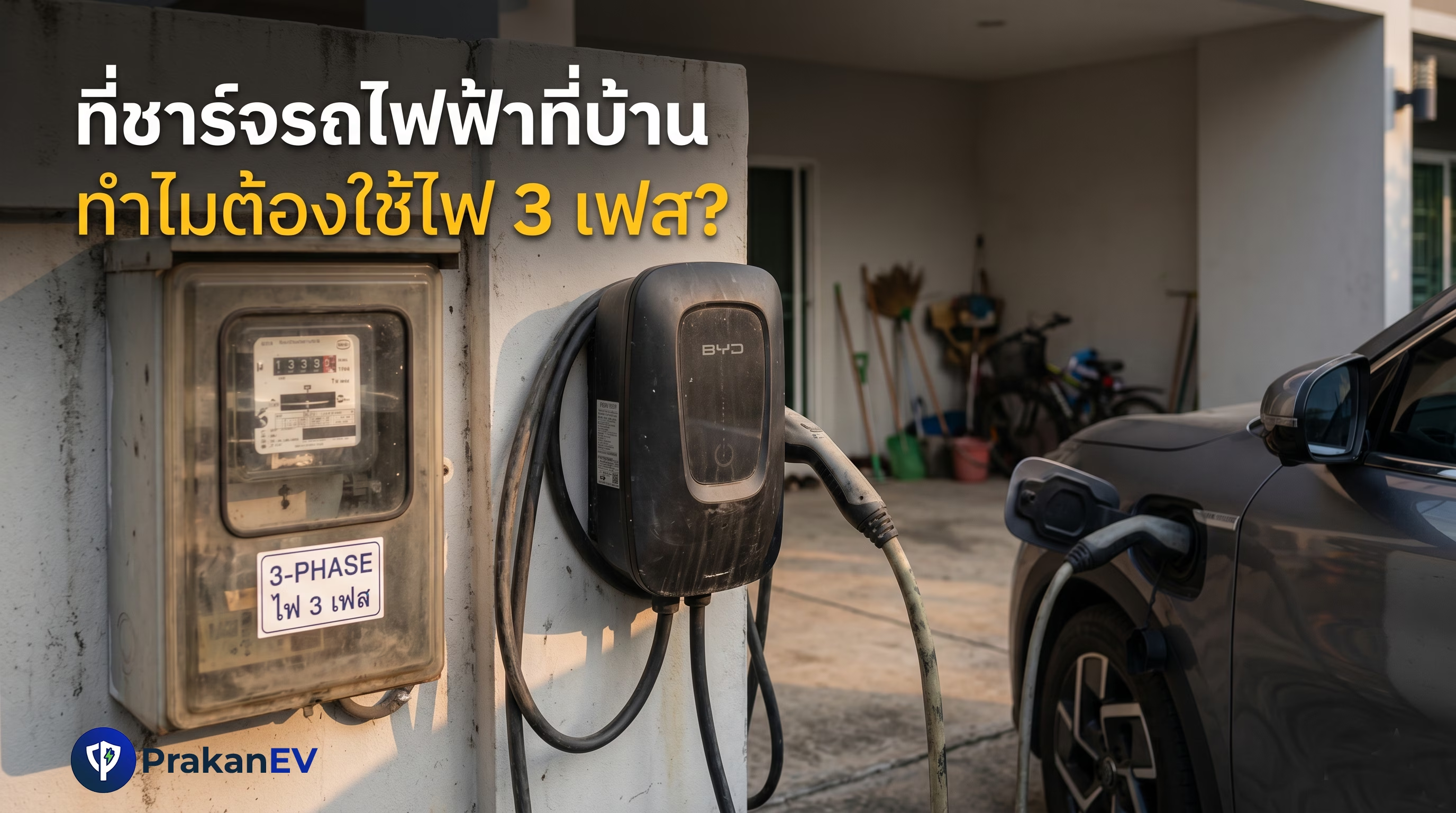
Why Your Home EV Charger Needs 3-Phase Power: The Full Story Beyond Just Faster Charging
Prepared by: The PrakanEV Team
Last updated: June 2026
Technical review by: EV Charging Specialist Engineers
Does Every EV Actually Need 3-Phase Power?
Short answer: not always. If your EV's on-board charger maxes out at 7kW AC — common on entry-level models like the BYD Dolphin, MG4, or base-spec BYD Atto 3 — a single-phase (1-Phase) setup will charge your car fully overnight without breaking a sweat. It works. It is fine.
But for newer EVs with high-capacity batteries and on-board chargers rated at 11kW or even 22kW AC, 3-phase power is no longer optional — it is essential. Without it, you are paying for charging speed your car is capable of but your house cannot deliver. And beyond speed, there are compelling safety and system-health reasons to make the switch regardless of what you drive.
5 Reasons to Upgrade to 3-Phase Before Installing Your EV Charger
1. Handles High Power Without Breaking a Sweat
Wallbox chargers designed for fast AC charging typically demand 11 kW to 22 kW. A standard single-phase residential supply can only deliver about 3-7.4 kW. Pushing beyond that on a single phase is a fire hazard — wires overheat, breakers trip, and you are left with a very expensive paperweight on your garage wall.
2. Dramatically Faster Charging — Like, Night-and-Day Faster
3-phase delivers more energy in the same amount of time. Here is what that looks like in practice:
- ● Single-Phase (7.4 kW): A 50 kWh battery takes roughly 6-7 hours to fill.
- ● 3-Phase (22 kW): Same 50 kWh battery — just 2-3 hours. That is the difference between "I hope it is ready by morning" and "I will plug in after dinner and it will be done before I finish Netflix."
3. Balanced Load Distribution Protects Your Entire Home
With 3-phase, a skilled electrician can distribute your heavy loads across separate phases: air conditioners on Phase 1, general appliances on Phase 2, and your EV charger dedicated to Phase 3. This eliminates the voltage sag you get when the compressor kicks in while the car is charging. Your fridge, your AC, and your electronics all live longer when they get clean, stable power.
4. Safety and Stability Under Sustained Heavy Load
EV charging is not like running a microwave for two minutes. It is a continuous, hours-long draw of maximum current — typically overnight while everyone is asleep. 3-phase systems are engineered for exactly this kind of sustained high load. They reduce heat buildup in wiring and dramatically lower the risk of electrical faults that can lead to fires.
5. Future-Proof Your Home Now, Not Later
The next generation of EVs — including electric pickups and large-family SUVs — will come with even bigger batteries and even faster on-board chargers as standard. 3-phase AC charging is becoming the baseline, not the upgrade. Installing 3-phase today means you will not have to rip open your walls and pay for a second upgrade in three years when you trade in for that electric pickup you have been eyeing.
The Truth About Unbalanced Loads and Your Electricity Bill
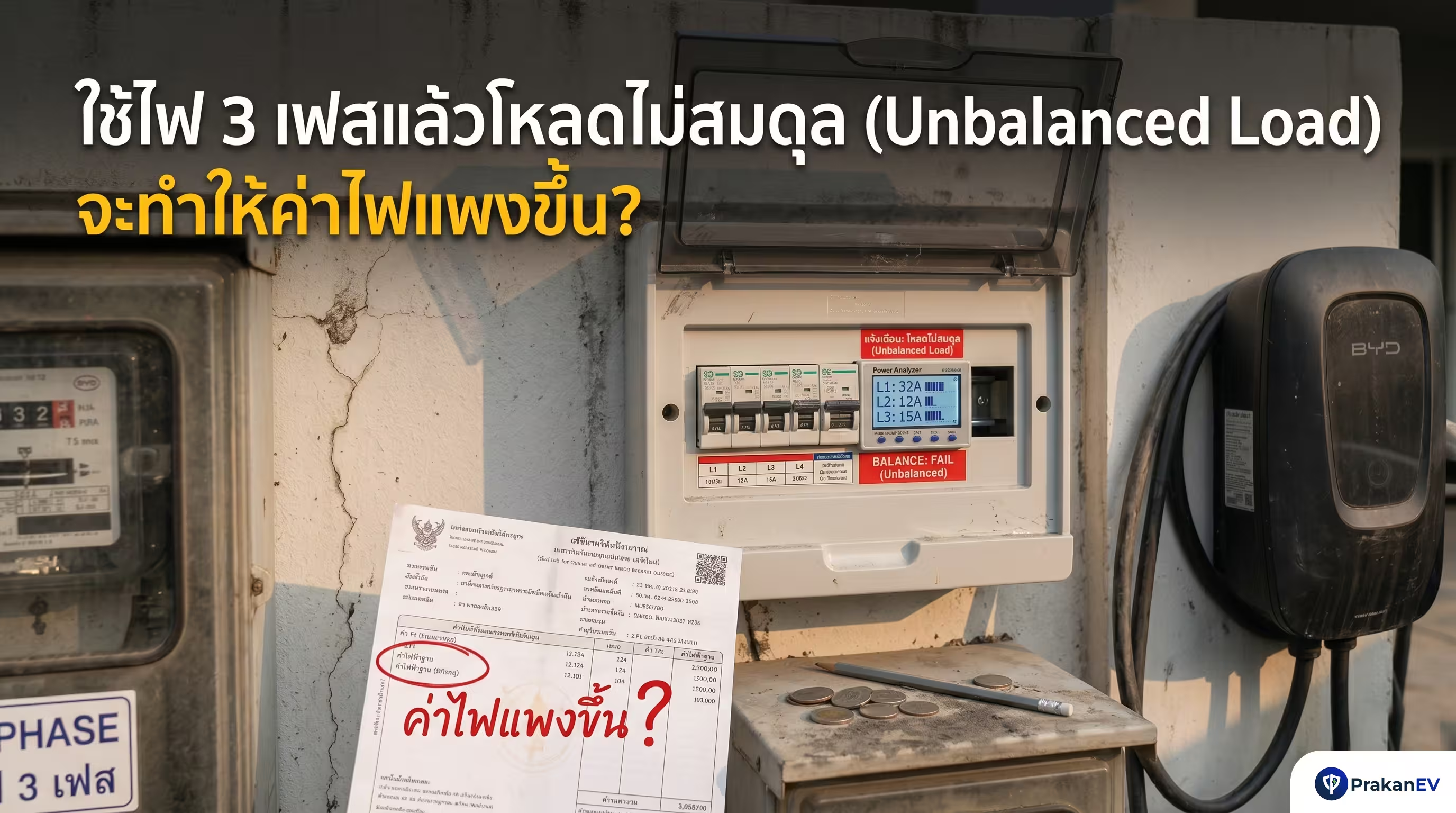
A common fear: "If my phases are unbalanced, will my electricity bill go up?" The answer is no — your meter charges you for actual energy consumed (kWh), not phase balance. The phases could be wildly uneven and your bill stays exactly the same.
What you do need to watch for: severe phase imbalance forces abnormally high current through the Neutral (N) wire, causing heat to build up in your wiring and at the transformer. This can lead to frequent nuisance breaker trips or motors in your appliances running inefficiently. This is why installation must be done by a qualified electrical engineer who knows how to balance phases properly — not your neighbor's cousin who "does electrical work on the side."
1-Phase vs 3-Phase for EV Charging: Side-by-Side
| Feature | Single-Phase (1-Phase) | Three-Phase (3-Phase) |
|---|---|---|
| Recommended Max Power | 3 kW - 7.4 kW | 11 kW - 22 kW and above |
| Charging Speed (50 kWh battery) | Slow (6-12 hours) | Fast (2-4 hours) |
| Voltage Stability | Moderate (prone to voltage drops under load) | Excellent (load is distributed across phases) |
| Best Suited For | Plug-in Hybrids / Small EVs / Low daily mileage | All BEVs / Fast AC home charging / Future-proofing |
Real Costs: Upgrading from 1-Phase to 3-Phase in Thailand
Here is what you should budget for a standard 15/45A 3-phase upgrade to support an EV charger. Prices are approximate as of mid-2026:
- Meter upgrade fee (MEA or PEA): Approximately 4,000 - 6,000 THB, paid to your local electricity authority.
- New main feeder cable: Your incoming service cable must be upgraded to copper or aluminum conductors sized for 3-phase. Budget 15,000 - 30,000 THB depending on the distance from the street pole to your main panel.
- 3-Phase consumer unit (Load Center) and breakers: A new distribution board with proper load balancing. Approximately 10,000 - 20,000 THB including installation.
- EV Charger and Wallbox installation: If you buy a new EV, most brands include a free Wallbox with basic installation. If purchasing separately (brands like ABB, Schneider, Huawei, or Autel), budget 30,000 - 50,000 THB for the unit plus professional installation.
Safety Standards and Regulations You Must Know
To ensure your 3-phase EV charger installation complies with MEA (Metropolitan Electricity Authority) or PEA (Provincial Electricity Authority) regulations — as well as the international IEC 61851 standard — verify the following with your contractor before work begins:
- Meter sizing: Minimum 15/45 Amp 3-phase. Do not accept anything smaller — you will regret it the first time you charge during a heatwave with every AC in the house running.
- Dedicated grounding: The EV charger requires its own independent ground rod and grounding conductor, with resistance values meeting the electricity authority's specifications. This is not optional — it is what keeps you alive if something goes wrong.
- RCD protection: You must use an RCD Type B (or Type A + DC 6mA detection) — specifically designed to detect and interrupt DC leakage current from electric vehicles. A standard household RCD will not protect you from an EV fault.
- Dedicated circuit: The charger must be on its own breaker with no other appliances sharing the circuit. Period.
Popular EVs That Benefit Most from 3-Phase
Many of today's leading EVs come from the factory with 11kW-22kW on-board chargers. A 3-phase setup unlocks their full potential. Examples of cars where 3-phase makes a real difference:
- Tesla Model Y / Model 3: Supports 11kW AC via Tesla Wall Connector. Full charge in 6-8 hours instead of 12+.
- BYD Sealion 7 / Seal: 11kW AC on-board charger. With 3-phase, their large batteries charge fast enough for demanding daily use.
- XPENG G6: 11kW AC charging — designed for owners who need a full battery every morning without planning their life around charging schedules.
- ZEEKR X: Stands out with up to 22kW AC support. Paired with a 22kW 3-phase Wallbox, this is currently one of the fastest home-charging setups available in Thailand.
The Bottom Line
Upgrading to 3-phase before installing your EV charger is one of the best long-term investments you can make for your home. It is not just about faster charging — it is about running your entire household's electrical system safely, stably, and efficiently while your car pulls maximum current for hours every night. If you want to do this right, have a licensed electrical engineer inspect your site and perform a professional load balance calculation before any work begins. The upfront cost is real, but the peace of mind — and the charging speed — pay for themselves every single morning you wake up to a full battery.
Frequently Asked Questions About 3-Phase EV Charging
1. Why do I actually need 3-phase for EV charging?
To handle higher charging power (11-22 kW) — up to 3x faster than single-phase. It also distributes your home's electrical load evenly across phases, reducing the risk of voltage drops and overloads that can damage sensitive electronics.
2. What actually happens with unbalanced 3-phase loads?
Severe imbalance pushes abnormally high current through the neutral wire, causing heat buildup and potential nuisance breaker trips. But your electricity bill is unaffected — meters charge based on real power (kWh), not phase balance.
3. What meter size do I need?
A 15/45 Amp 3-phase meter is the recommended minimum. This ensures enough capacity for EV charging alongside air conditioning and everyday household appliances running simultaneously.
4. Can I charge an EV on regular single-phase power?
Yes. If your EV and Wallbox both support 7kW on single-phase, overnight charging covers daily driving just fine. It will simply take longer than a 3-phase setup — plan on 6-12 hours instead of 2-4.
5. Does a 7kW Wallbox need 3-phase?
No. 7kW and 7.4kW Wallboxes are purpose-built for standard single-phase residential power. They work perfectly without any electrical upgrade.
6. Can I charge a Tesla on single-phase power?
Yes — with a Tesla Wall Connector set to single-phase mode, you will get up to 7.4kW. But to unlock the full 11kW charging speed your Tesla is capable of, you need a 3-phase supply.
7. How long does the 3-phase meter upgrade take?
Once your electrician has completed the internal wiring and panel upgrade, submitting the application and waiting for MEA or PEA to install the new meter typically takes 1-2 weeks.
8. Will my electricity bill go up?
No. Your bill is calculated on energy consumed (kWh), not the number of phases. 3-phase changes how power is delivered to your home, not how much each unit of electricity costs.
Related Articles
- EV Battery Replacement Cost 2026: How Expensive Is It Really?
- Compare Class 1 EV Insurance (100% Battery Coverage)
PrakanEV provides EV insurance for all brands — from BYD, Tesla and MG to the newest models on the market. See the full list on our homepage.