EV insurance is not overpriced because insurers are greedy. It is driven by "engineering cost structure" — real, physical factors that make repairing an EV fundamentally more expensive than repairing a petrol car:
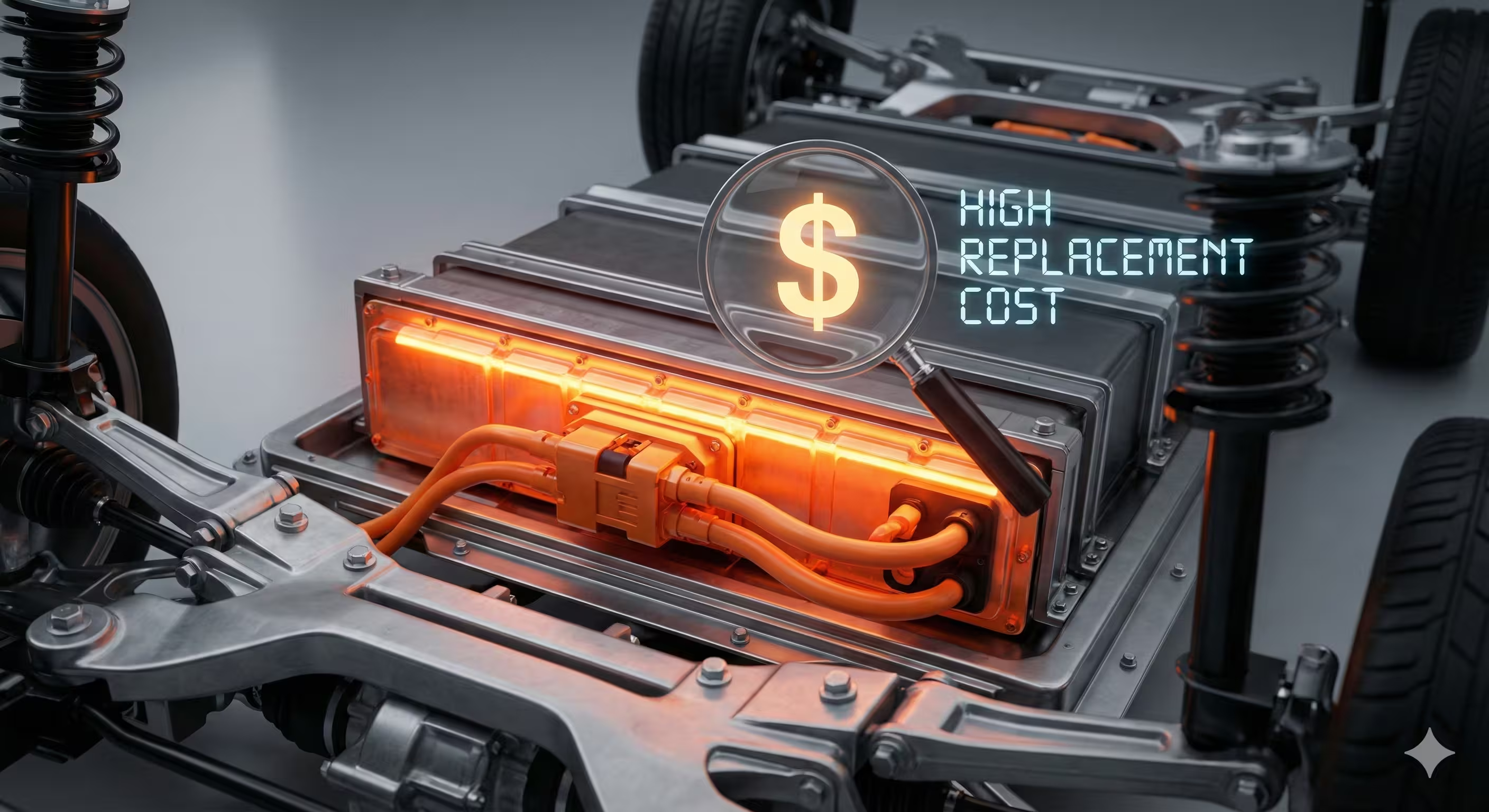
1. HV Battery: Costs 50-70% of the car. Cannot be repaired — only replaced whole.
2. Gigacasting: Single-piece structures that are incredibly strong but nearly impossible to repair.
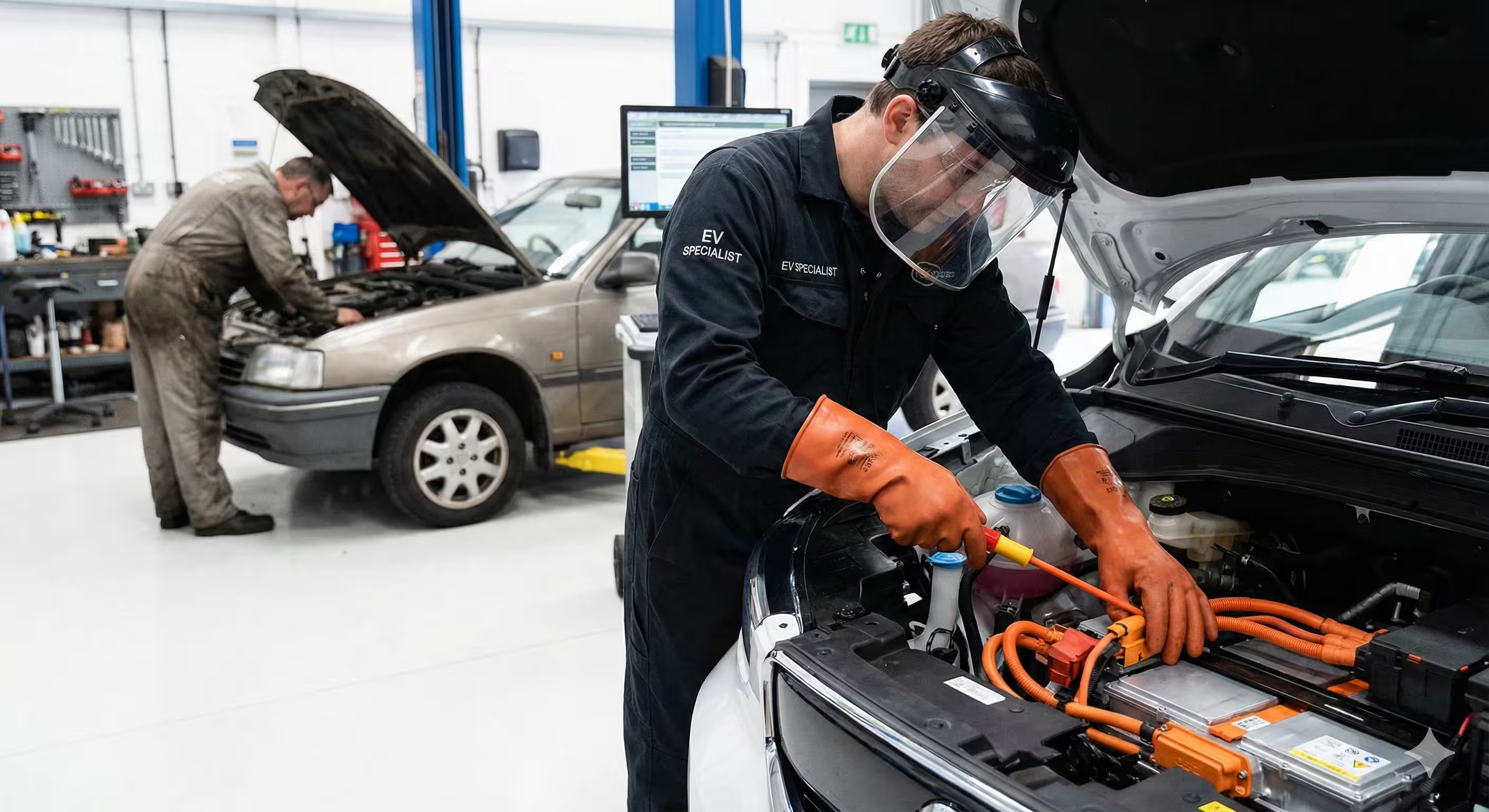
3. Labor Costs: Certified EV technicians cost roughly 3x more per hour than general mechanics.
4. Total Loss Rate: EVs get written off after moderate accidents at a significantly higher rate than petrol cars.
As Thailand enters 2026, electric vehicles are no longer a novelty. But one thing remains a genuine "culture shock" and a constant source of debate among owners: the insurance premium.
Owners keep asking the same question: "I drive a Tesla Model 3 worth 1.59 million baht — same price as a Honda Accord. So why do I pay 45,000 THB per year for Class 1 insurance while the Accord owner pays just 22,000 THB?" That is a nearly 100% difference. Where is that money going? This article from PrakanEV will take you deep into the cost structure that insurers never explain in plain language — with a head-to-head parts comparison table so you can see the risk with your own eyes.

1. The High-Voltage Battery: The Fragile Heart That Costs a Fortune
In a combustion car, the engine contains thousands of individual parts. If something breaks, you can "overhaul" it — replace pistons, rings, gaskets — within a budget of tens of thousands of baht. An EV "battery" is fundamentally different. It is a monolithic component with an eye-watering price tag.
Why Batteries Are an Insurer's Nightmare
- The price is staggering: One battery pack for a mid-size EV costs 500,000 - 900,000 THB — that is 40-70% of the entire car's value in a single component.
- Cannot be repaired — manufacturer policy: Most automakers (especially Chinese and American brands) enforce a strict rule: if there is damage to the battery casing, or any risk of internal short-circuiting, the service center "will not authorize a repair." To prevent thermal runaway (battery fire), they order a complete pack replacement. There is no "let us just replace the damaged cells" option.
- Total Loss risk is dramatically higher: Imagine your EV scrapes over a curb hard enough to dent the battery casing — a seemingly minor incident. The service center quotes 600,000 THB for a new pack. Your car's insured sum is 800,000 THB. The insurer does the math: paying 600,000 THB to repair a car worth 800,000 THB makes no sense. They declare a Total Loss and cut you a check instead. This scenario — unthinkable in a petrol car — is routine for EVs. That risk is priced directly into your premium.
2. Head-to-Head Repair Cost Comparison: EV vs. Gas Car
Numbers speak louder than explanations. Here is an estimated cost comparison for a moderate rear-end collision, based on 2025-2026 authorized service center pricing:
| Repair Item (Parts & Labor) | Petrol Car (C-Segment) | EV Sedan | Difference |
|---|---|---|---|
| Rear bumper | 4,500 THB | 18,000 THB | +300% |
| Trunk lid / tailgate | 6,000 THB (repair & paint) | 32,000 THB (aluminum, replace) | +433% |
| Sensors / cameras | 2,500 THB | 15,000 THB (requires recalibration) | +500% |
| Chassis / body structure | 10,000 THB (frame straightening) | 80,000 THB (cut & replace Gigacast section) | +700% |
| Estimated Total | ~23,000 THB | ~145,000 THB | 6x more expensive! |
3. Gigacasting: The Innovation That Keeps Insurers Up at Night
Tesla pioneered this trend, and Chinese brands like XPeng are following fast. Gigacasting uses enormous high-pressure die-casting machines to form entire sections of the car's structure — front or rear — as a single piece, replacing what used to be 70-100 individually welded steel parts.
The upside: Lighter. Stiffer. Faster to manufacture.
The downside (from an insurance perspective): "It cannot be repaired." If an accident cracks or warps this casting — even slightly — the structural integrity is considered compromised. You cannot cut out a section and weld in a patch. The entire frame piece must be replaced. The cost is enormous. This is the single biggest reason why a moderate EV crash so often ends in Total Loss.
4. The Certified Technician Crisis
When your petrol car breaks, you can pull into the neighborhood garage and the mechanic with 20 years of experience under his fingernails will sort it out. With an EV, "that is not an option."
- Life-threatening voltage: High-voltage systems run at 400V-800V. One wrong move by an untrained mechanic means death — not injury, death. No general garage will touch it.
- Certified labor is expensive: Repair shops must hire technicians with official EV certifications. Their hourly rate is 2-3x that of a general mechanic.
- Equipment costs are passed to insurers: EV-capable body shops must invest millions of baht in insulated tools, PPE suits, and dedicated quarantine parking areas for damaged EVs awaiting repair. These overhead costs are baked into the labor rates that insurers ultimately pay — and that you ultimately pay through your premium.
5. The Outlook: Will Premiums Come Down in 2026-2027?
Based on data from the Thai General Insurance Association and global industry trends, our analysis is that EV premiums will "stay elevated" for another 1-2 years. But there are three positive signals on the horizon that should eventually bring relief:
- Local battery production: Battery factories coming online in Rayong and Chonburi will slash import duties and shipping costs, bringing down the replacement price that insurers have to pay.
- Right to Repair movement: Independent garages are beginning to develop the capability to "repair individual battery modules" — replacing only the damaged cells rather than the entire pack. This could reduce claim costs by 60-70% once widely available.
- Usage-Based Insurance (UBI): AI and telematics systems that track actual driving behavior are coming. Safe drivers will be rewarded with lower rates; aggressive drivers will pay more. This shifts the pricing model from "all EV owners pay more" to "risky drivers pay more" — fairer for everyone.
🛡️ If You Are Paying a Premium Price, Make Sure You Get Premium Coverage
Do not gamble on cheap insurance that leaves your battery exposed. Let PrakanEV compare EV insurance plans across leading insurers — with exclusive offers you will not find anywhere else.
👉 Check EV Insurance Premiums — Free! (Click)Before you decide, compare EV insurance from several insurers on our homepage — you will see premiums and coverage side by side.